dotdailydose

The Cebuana Lhuillier Foundation, Inc. (CLFI), the corporate social responsibility arm of the PJ Lhuillier Group of Companies, took center stage in leading the first National Financial Inclusion Summit (NFIS 2025), a landmark gathering held at Novotel Manila in Quezon City.
Co-presented by the Polytechnic University of the Philippines (PUP), the Philippine Association of State Universities and Colleges (PASUC), and the League of Corporate Foundations (LCF), the Summit carried the theme #LahatKasama: Strengthening Financial Inclusion through Education, a rallying call to transform financial literacy into a national life skill and to ensure that inclusive growth becomes a shared reality for all Filipinos. The event convened the country’s foremost educators, policymakers, and industry leaders in a collective movement to embed financial education into the very fabric of the nation’s learning systems, recognizing that education is the cornerstone of financial inclusion and empowerment.


The urgency of this mission was underscored by sobering statistics from the Bangko Sentral ng Pilipinas (BSP), which reveal that nearly half of Filipino adults remain unbanked, while only 27 percent of youth aged 15 to 19 hold a formal financial account. CLFI emphasized that inclusion must begin in the classroom, where teachers, administrators, and institutions serve as gateways to equip young Filipinos not only with access to financial tools but also with the wisdom to use them effectively. Jean Henri D. Lhuillier, President and CEO of PJ Lhuillier Group of Companies, captured this vision in his remarks: “Access opens the door, but education teaches people how to walk through it and build new ones for others. When teachers integrate budgeting, saving, and planning into everyday lessons, they are not only shaping smarter learners—they are cultivating financially resilient citizens.” His words reflected the Summit’s central belief that financial literacy is not merely about understanding money but about enabling individuals to make informed choices, prepare for emergencies, and recover from setbacks.
The Summit opened with welcome remarks from Dr. Manuel M. Muhi, President of PUP, followed by messages of support from Shem Jose W. Garcia, Chairperson of LCF, and Senator Paolo Benigno A. Aquino IV. Representing Secretary Angara, Assistant Secretary Janir T. Datukan delivered the keynote address titled “Educating for Inclusion: Turning Schools into Gateways of Financial Empowerment for Every Filipino.” These opening sessions set the tone for a day of dialogue and collaboration, highlighting the role of education in bridging gaps and ensuring that no learner is left behind in the country’s journey toward resilience and empowerment.
Morning spotlight sessions featured Carmina F. Bayombong, Founder and CEO of InvestEd Philippines, who discussed how student financing can break barriers to access, while Michael F. Rellosa, Executive Director of the Philippine Insurers and Reinsurers Association (PIRA), spoke about inclusive and digital insurance as a tool for protection. A panel discussion moderated by Dr. Ria S. Fajilago of PUP followed, exploring how schools can make financial literacy a national strength.

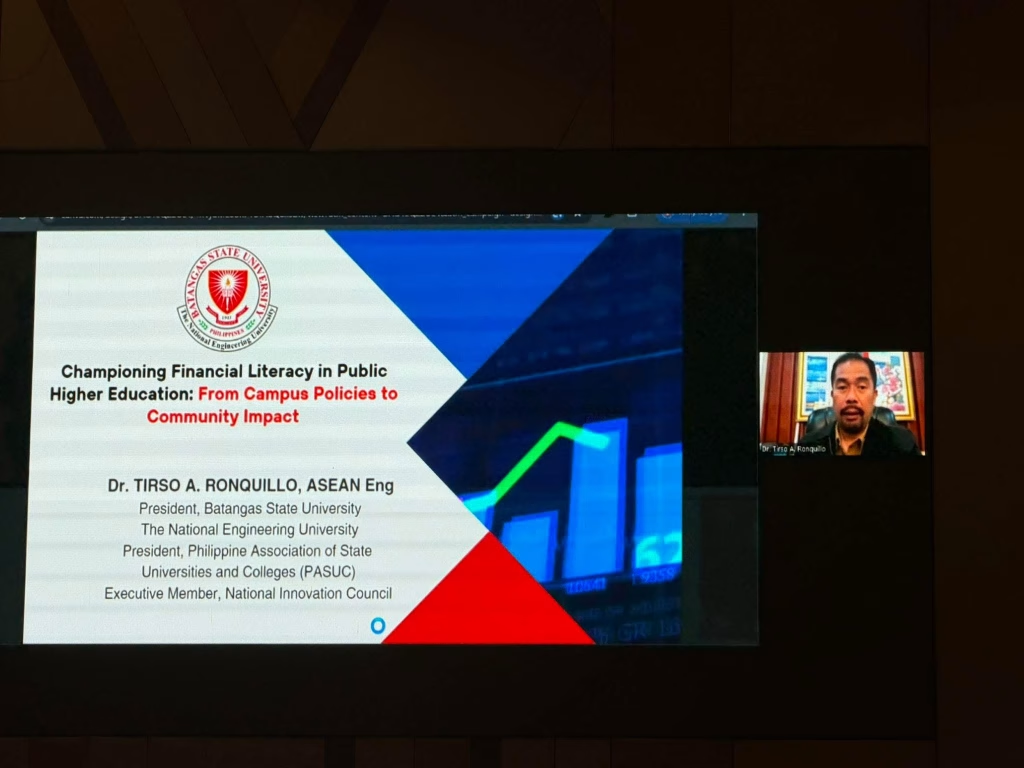
In the afternoon, Dr. Tirso A. Ronquillo, President of PASUC, and Jean Henri D. Lhuillier delivered keynote addresses linking financial literacy to educational policy and community development.
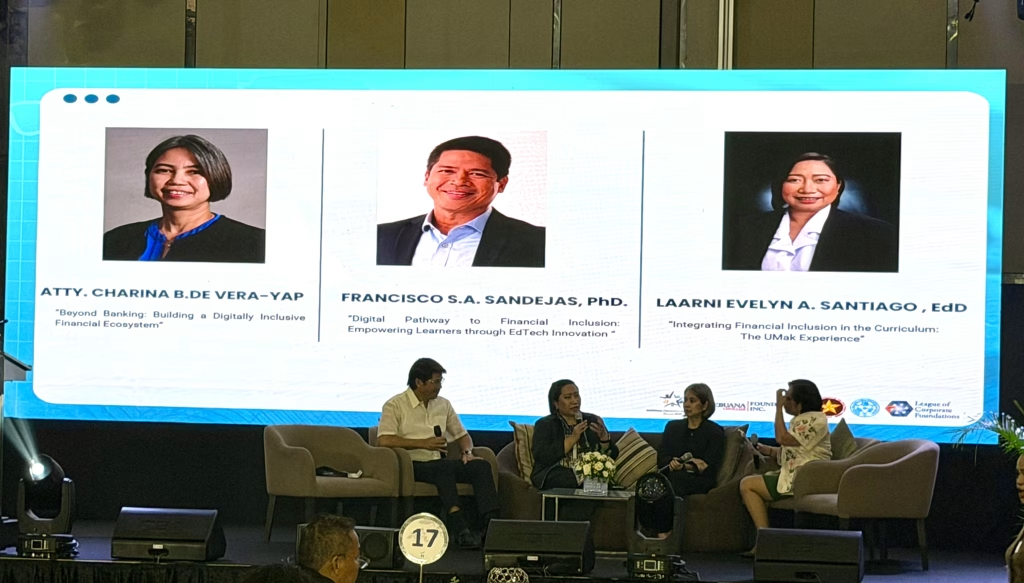
Atty. Charina B. Vera-Yap of the BSP presented digital inclusion initiatives, while Dr. Francisco S. A. Sandejas of Xepto Education Philippines and Dr. Laarni Evelyn A. Santiago of the University of Makati shared technology-driven strategies for classroom integration. These sessions collectively demonstrated that financial inclusion is a multi-sectoral effort requiring innovation, collaboration, and sustained commitment.
The Summit culminated in the launch of the #LahatKasama Financial Literacy Module, hailed as the most comprehensive financial literacy module in the country. Designed as a digital learning tool, the module provides teachers with interactive materials on saving, investing, and disaster preparedness, making financial education more practical and engaging.
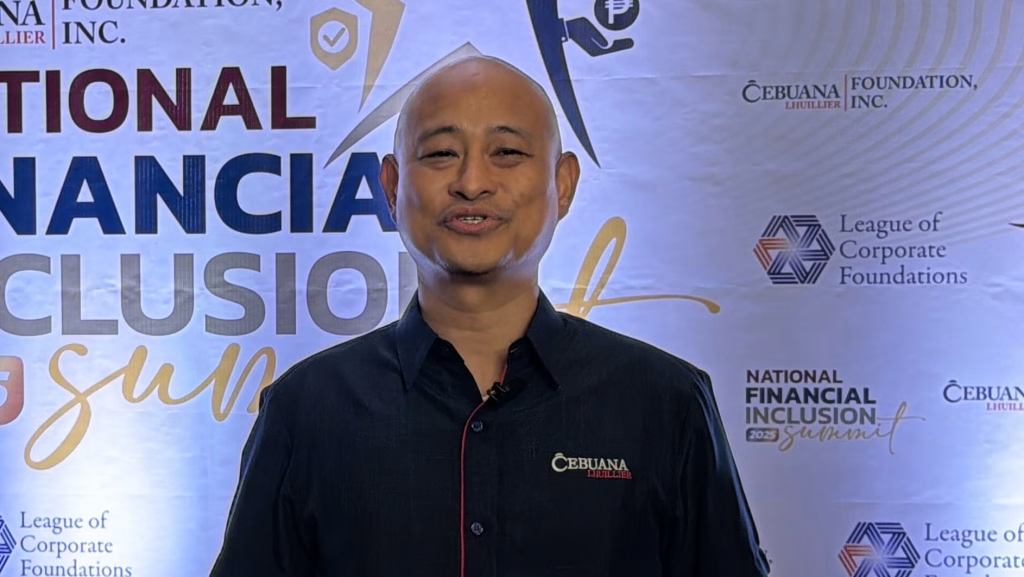
For Jonathan D. Batangan, Executive Director of CLFI, this initiative represents more than a one-day event; it is the beginning of a nationwide collaboration. “Financial inclusion is not just access. More importantly, it is empowerment,” Batangan said. “Through our partnerships with DepEd, CHED, TESDA, and our academic and corporate partners, we are turning classrooms into launchpads of empowerment. Every lesson in financial education becomes a step toward a more resilient and inclusive Philippines.”
NFIS 2025 supports the BSP’s National Strategy for Financial Inclusion (2022–2028) and aligns with the United Nations Sustainable Development Goals on education, poverty reduction, and decent work. Beyond its sessions and partnerships, the Summit stands as a national movement, calling for every teacher to be a mentor of financial discipline, every campus to be a hub of financial inclusion, and every learner to be an advocate of resilience. As Jean Henri D. Lhuillier aptly concluded, “Inclusion begins with education. When education and financial literacy move together, we create not only informed individuals but empowered communities capable of withstanding any challenge.” The Summit reaffirmed CLFI’s mission to build a nation where financial literacy is not optional but essential, ensuring that progress, resilience, and opportunity truly include everyone.