dotdailydose
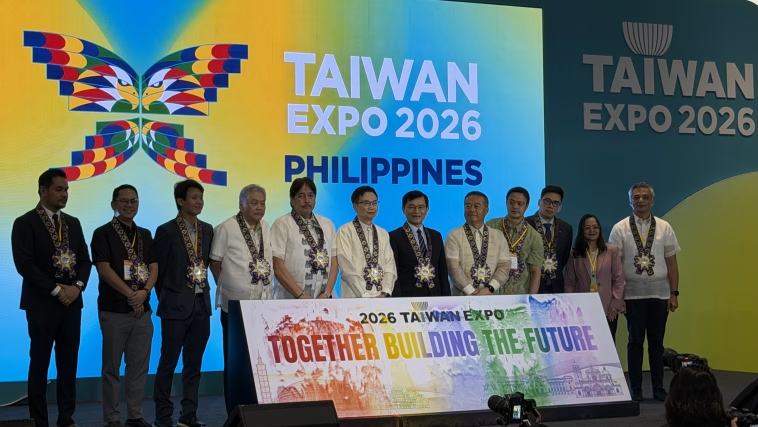
Taiwan Expo 2026 in the Philippines opened Thursday at the SMX Convention Center Manila, bringing 125 Taiwanese companies into a market confronting gaps in energy access, healthcare affordability, agricultural productivity and industrial digitalisation.
Running until September 19, the three-day trade exhibition brings together companies in artificial intelligence, smart manufacturing, renewable energy, healthcare, agriculture, food and consumer products and the Philippines seek deeper commercial and technology partnerships.

The event comes as the Philippines accelerates investment in digital and physical infrastructure while addressing uneven access to essential services across the country.
The Philippine digital economy reached P2.74 trillion in 2025, equivalent to 9.8 percent of gross domestic product (GDP), according to the Philippine Statistics Authority (PSA). It also employed 10.39 million people, representing 21.2 percent of total employment in the country.
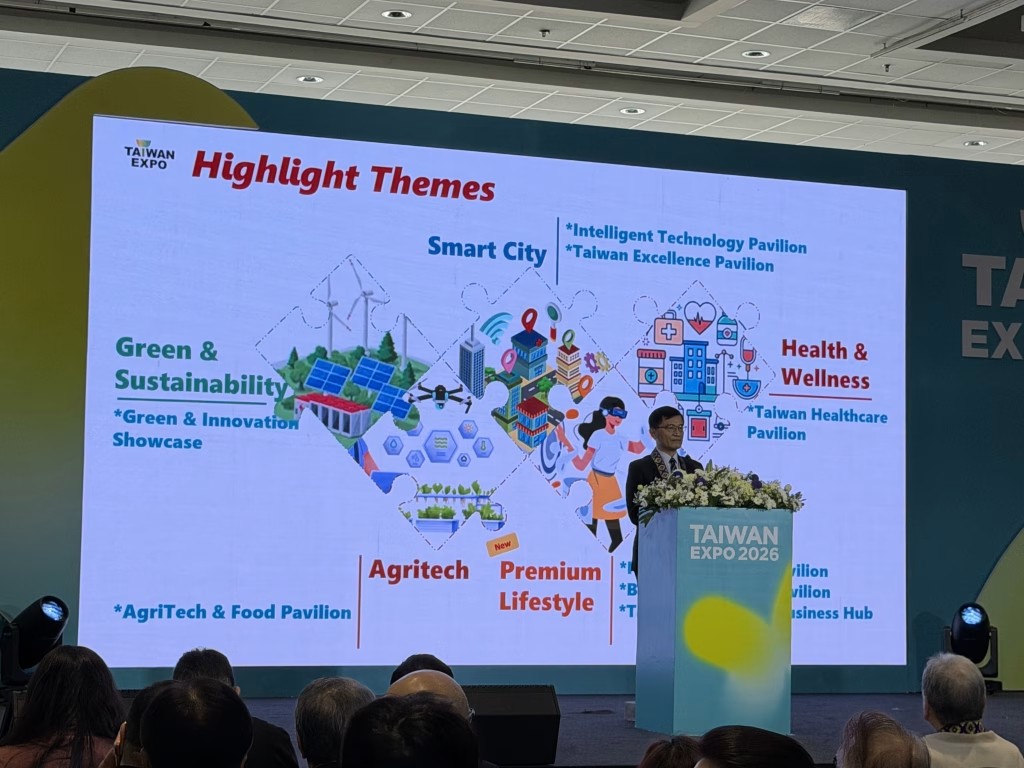
The expansion is creating demand for the infrastructure, automation, and technology needed to support further digitalisation. At the expo, Taiwanese companies are presenting Artificial Intelligence of Things (AloT), Al visual recognition, collaborative robotics, smart security, industrial monitoring and transportation technologies aimed at businesses and institutions looking to automate operations.
The Smart Tech Pavilion includes companies such as Techman Robot, CyberLink and VIA Technologies, while the Taiwan Excellence Pavilion features 24 companies presenting 50 products across smart technology, healthcare, consumer electronics and lifestyle categories.
The technologies are being introduced as the Philippines also confronts significant infrastructure disparities outside its major economic centres.
Department of Energy (DOE) data shows that approximately 1.55 million Philippine households remained unserved by electricity in 2024, with the national household electrification rate at around 94.8 percent. The disparity is particularly pronounced in some parts of Mindanao. In the Bangsamoro Autonomous Region in Muslim Mindanao (BARMM), for example, household electrification stood at just 43.2 percent.
The gap is one of the areas being addressed by Taiwanese energy companies exhibiting technologies such as sodium-ion batteries, energy management systems, transformers, methanol-hydrogen generators and other decentralised energy solutions that could support areas where conventional grid expansion remains challenging.
The Philippine goverment is simultaneously targeting renewable energy to account for 35 percent of the country’s power generation mix by 2030 and 50 percent by 2040, increasing the need for investments in energy storage, grid management and other technologies capable of supporting greater renewable energy integration.
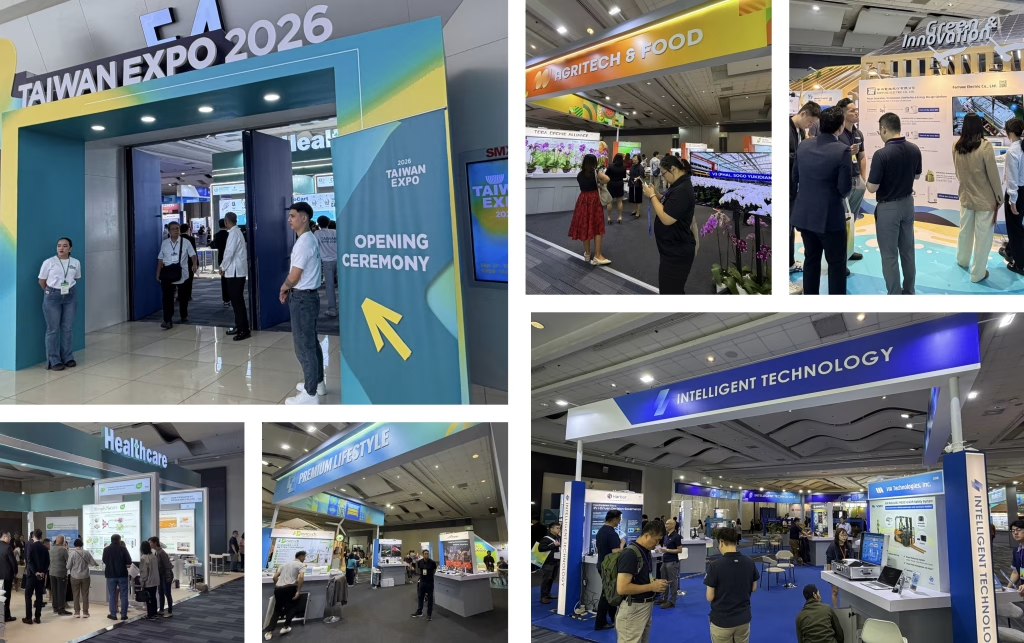
Other sustainability-focused technologies at the expo include solar products, energy-efficient building materials, smart recycling systems and environmentally friendly consumer products.
Healthcare is another sector where technology is being positioned against a measurable domestic challenge.
Philippine total health expenditure reached P1.87 trillion in 2025, up 15.1 percent from the previous year, according to PSA. Despite increased government participation in healthcare financing, Filipino households continued to directly shoulder 41.2 percent of current health expenditure through out-of-pocket payments.

The Smart Medical Pavilion is presenting medical devices, biotechnology products, regenerative medicine and healthcare services, alongside a Taiwan-Philippines Smart Medical Seminar aimed at connecting Taiwanese companies with Philippine hospitals, medical institutions and potential local partners.
Agriculture presents a similar productivity and modernisation challenge. It accounted for 20.7 percent of Philippine employment in December 2025, while agriculture, forestry and fishing accounted for only 7.9 percent of the country’s GDP for the full year.
Efforts to mechanise the sector illustrate the productivity gains that technology can provide. The Philippine Center for Postharvest Development and Mechanization (PHilMech) deployed 5,030 units of rice production and post-harvest equipment in 2024. The Department of Agriculture (DAR) reported that modern rice processing systems have increased milling recovery rates from around 55 to 58 percent to as high as 63 to 65 percent.
At Taiwan Expo, agricultural technologies include livestock environmental controls, agricultural automation, autonomous farming equipment and food processing, preservation, and packaging systems.
The Agritech and Food Pavilion is also introducing Taiwanese food products to Philippine buyers, including specialty teas, tapioca pearls and processed food products, as companies seek distributors and retail partners in a Philippine market with a population of more than 112 million.
The expo also brings together beauty, wellness and lifestyle companies seeking access to the Philippine consumer market through personal care products, healthcare supplies, smart home products and other “Made in Taiwan” goods.
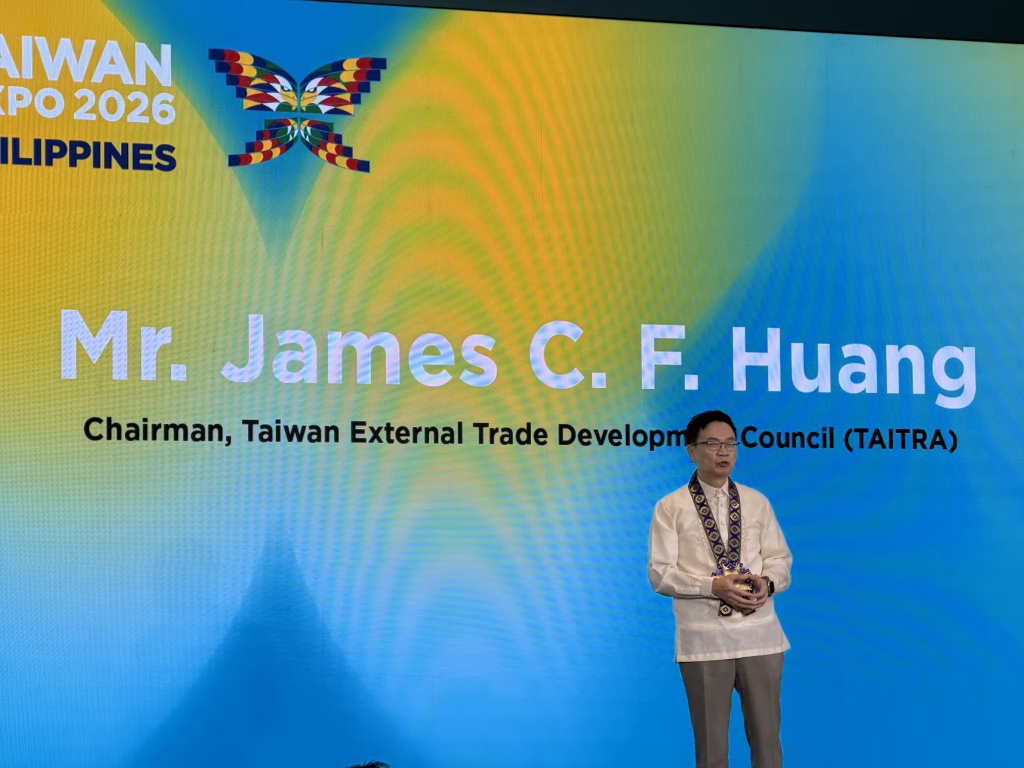
Taiwan External Trade Development Council (TAITRA) Chairman James C. F. Huang highlighted trust as an important foundation of Taiwan-Philippines relations, pointing to the expansion of exchanges beyond industrial supply chains and into products and services encountered by consumers.
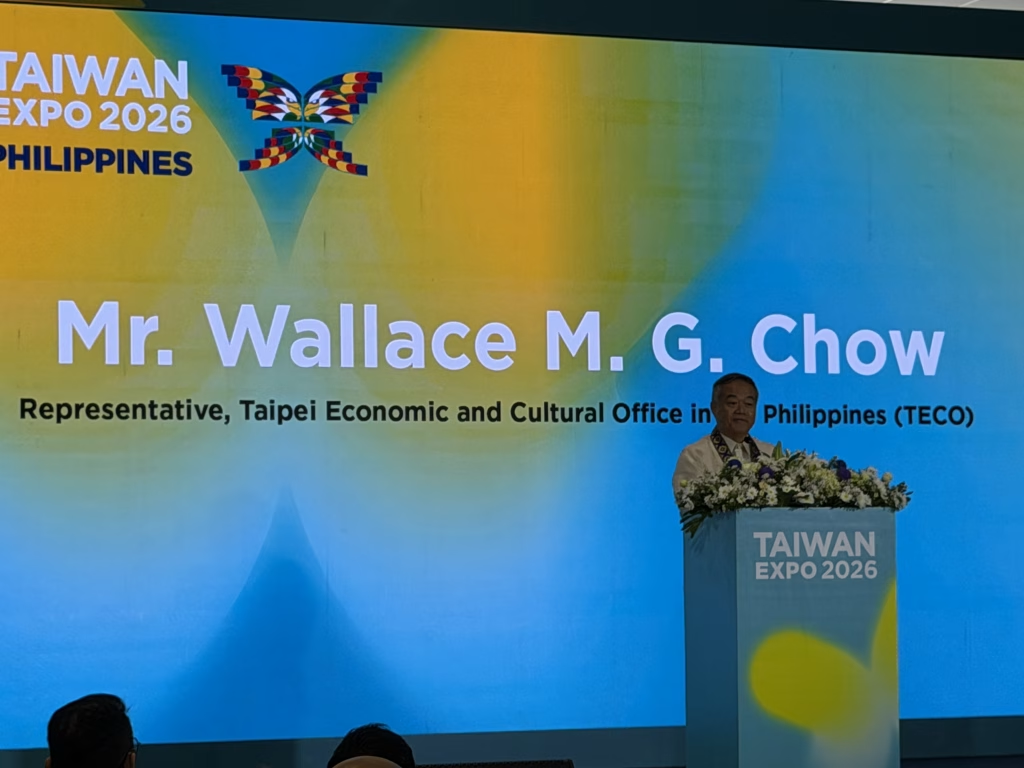
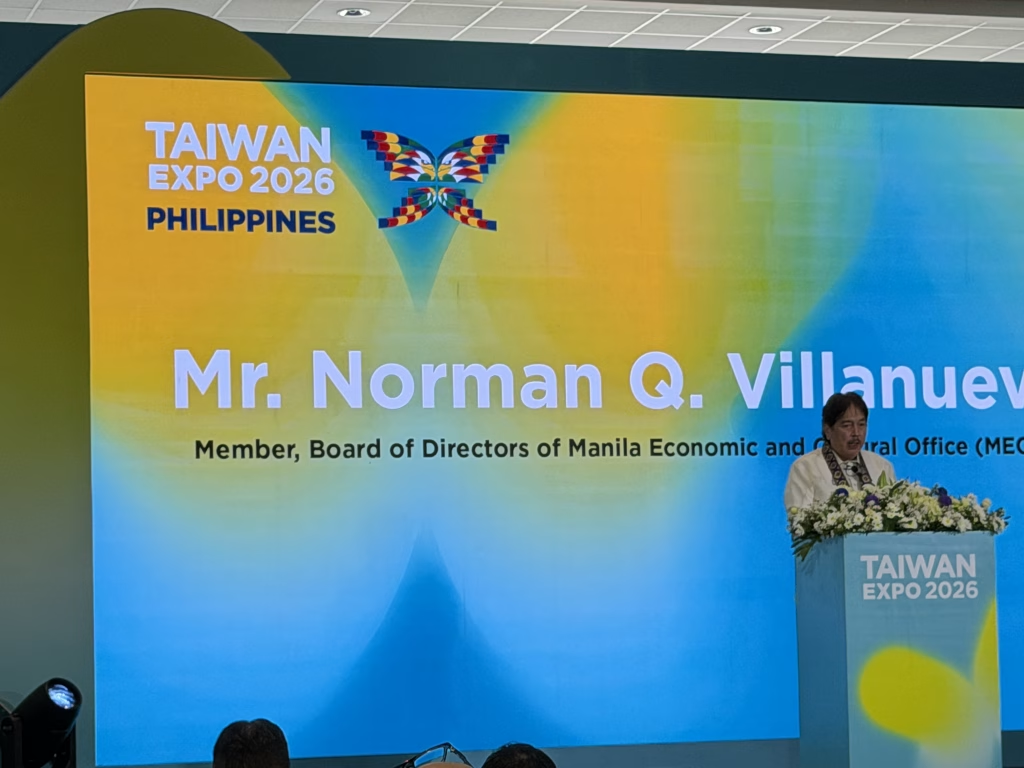
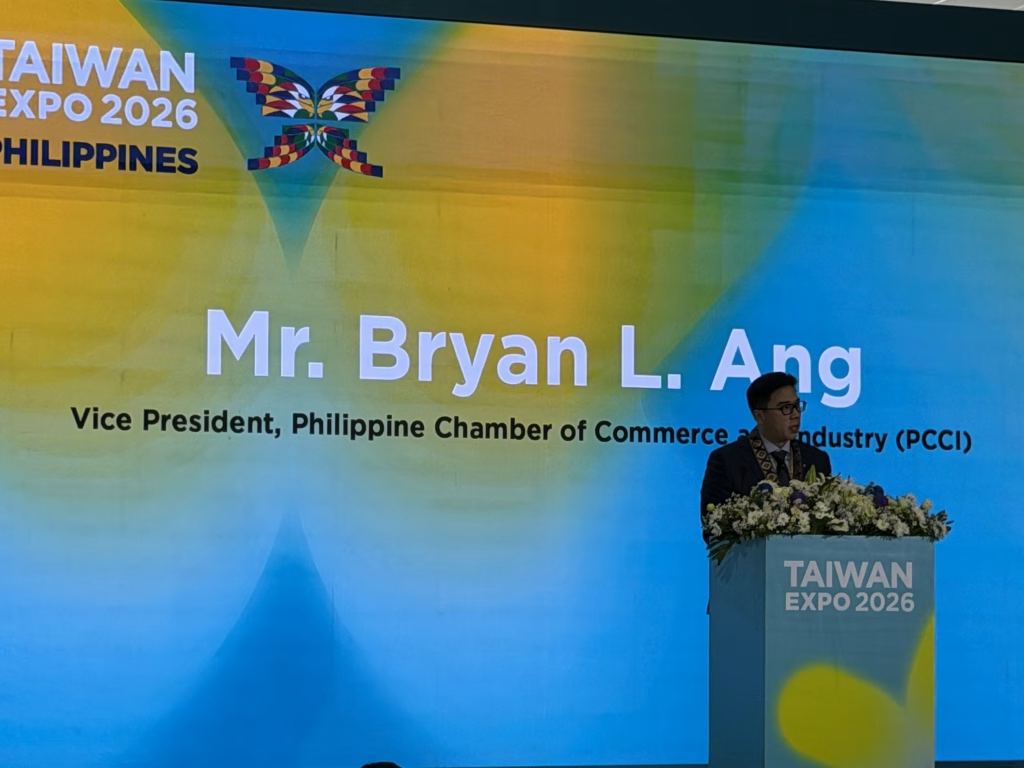
Taipei Economic and Cultural Office in the Philippines (TECO) Representative Wallace M.G. Chow also highlighted growing exchanges in trade, investment and talent, while Manila Economic and Cultural Office Director Norman Villanueva and Philippine Chamber of Commerce and Industry Vice President Bryan L. Ang pointed to opportunities for greater cooperation between Taiwanese and Philippine companies.
The relationship is particularly relevant to electronics and semiconductor supply chains.
Taiwan is a major global centre for semiconductor manufacturing and advanced electronics, while electronic products remain the Philippines largest merchandise export category.
Taiwan Expo 2026 is also hosting the inaugural Taiwan-Japan-Philippines Industrial Cooperation Forum, bringing Taiwanese and Japanese companies together with Philippine businesses to explore potential cooperation in areas including green energy and smart cities.
The forum includes Taiwanese companies such as Shihlin Electric & Engineering and Fortune Electric and seeks to connect foreign technology providers with Philippine system integrators, distributors and other local partners.
Organized by Taiwan’s International Trade Administration under the Ministry of Economic Affairs and implemented by the Taiwan External Trade Development Council, Taiwan Expo 2026 in the Philippines runs from September 17 to 19 at the SM Convention Center Manila.