dotdailydose
For many travelers, a stopover is simply a pause between destinations. In Taiwan, however, it becomes part of the journey itself. With world-class transportation, seamless airport connectivity, and vibrant urban centers located just a short ride away, even a few hours can open the door to meaningful experiences.
The Taiwan 100 Ways: Waves of Stopover journey demonstrates how a transit experience can transform into an adventure filled with culture, creativity, and discovery. Upon arrival in Taipei, travelers are immediately immersed in a destination where convenience meets possibility. Efficient rail systems, accessible public transportation, and walkable districts make it remarkably easy to move from airport terminals to iconic landmarks, bustling streets, and local communities.

The tour begins with the Morning Tour: Art Tour of Old Streets in Taiwan, showcasing one of Taiwan’s greatest strengths: its ability to offer rich experiences within a compact timeframe.
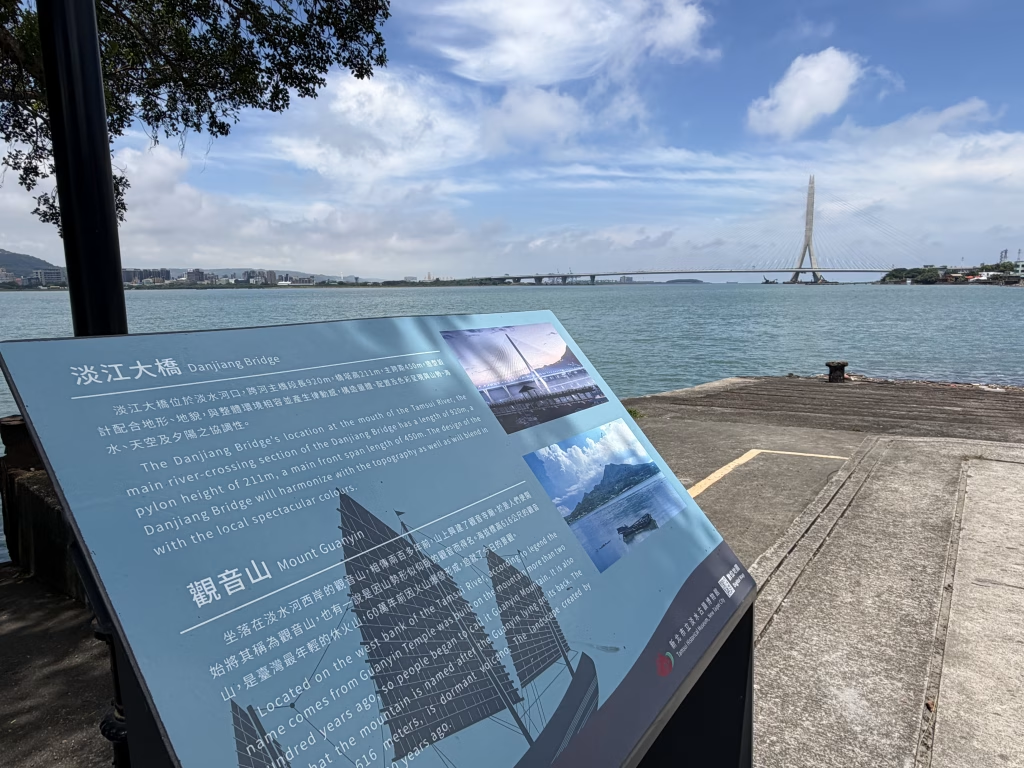
In New Taipei City’s Tamsui district, the iconic Danjiang Bridge frames scenic waterfront views. The Danjiang Bridge is not only Taiwan’s first cable-stayed bridge but also the world’s longest single-tower asymmetric cable-stayed bridge, blending engineering brilliance with cultural artistry inspired by the Tamsui sunset and Cloud Gate Dance Theatre. Beyond its striking silhouette, it offers fascinating fun facts that highlight its global significance and local charm.

-
World Record Design: At 920 meters long with a 450-meter main span, it holds the title of the world’s largest single-tower asymmetric cable-stayed bridge. Its tower rises 200 meters (about 66 stories), making it a dominant feature of the Tamsui skyline.
-
Architectural Legacy: The design was created by Zaha Hadid Architects, who won the international competition in 2015. The bridge’s lines echo the movements of Cloud Gate dancers, while its tower resembles “hands clasped together,” symbolizing blessings for Taiwan.
-
Seismic Strength: Built in an earthquake-prone region, the bridge can withstand magnitude 7 or higher earthquakes thanks to advanced seismic support systems including hydraulic dampers and friction pendulum bearings.
-
Eco-Friendly Engineering: Its single-tower design minimizes disruption to the Tamsui River estuary ecosystem, preserving aquatic habitats while reducing visual impact on the famous sunset views.
-
Multi-Modal Transport: The bridge is 71 meters wide, accommodating cars, buses, motorcycles, pedestrians, cyclists, and even a reserved lane for the Danhai Light Rail, making it both a transport hub and leisure space.
The Fuyou Temple, meanwhile, reveals centuries of spiritual heritage. Also known as the Tamsui Mazu Temple, it is not only a spiritual landmark but also a fascinating cultural site with plenty of fun facts woven into its history and design. The temple’s layout follows the traditional Taoist style, with its front hall, stage, main hall, side corridors, and rear hall forming a harmonious sequence that reflects balance and order. At the center of the main hall, Goddess Mazu reigns as the principal deity, flanked by Avalokitesvara Bodhisattva and the Narcissus King, creating a triad of compassion, prosperity, and protection.
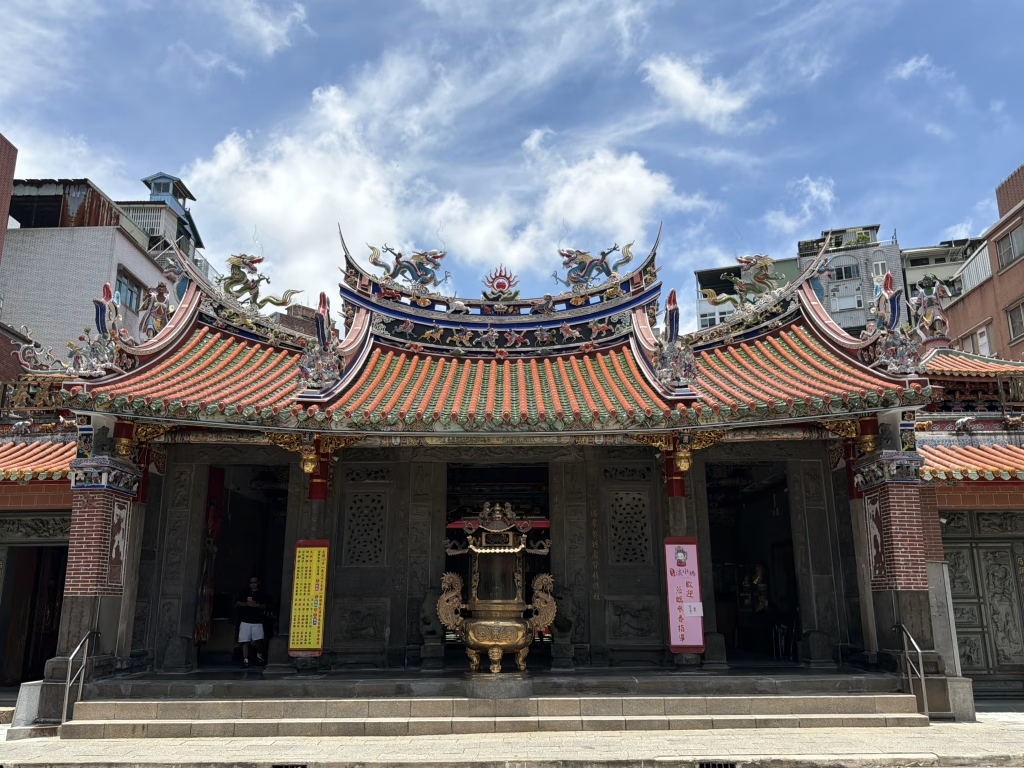
Fun fact: the temple’s stage was historically used for opera performances dedicated to the gods, blending entertainment with worship. Another quirky detail is the presence of the Matchmaking God, where visitors often leave offerings or prayers for love and marriage. The bell and drum towers, once used to mark time and signal ceremonies, add to the temple’s lively atmosphere, while shrines to figures like Guan Yu, the Tiger General, and the City God showcase the temple’s diverse pantheon, making it a vibrant hub of faith, folklore, and community tradition.


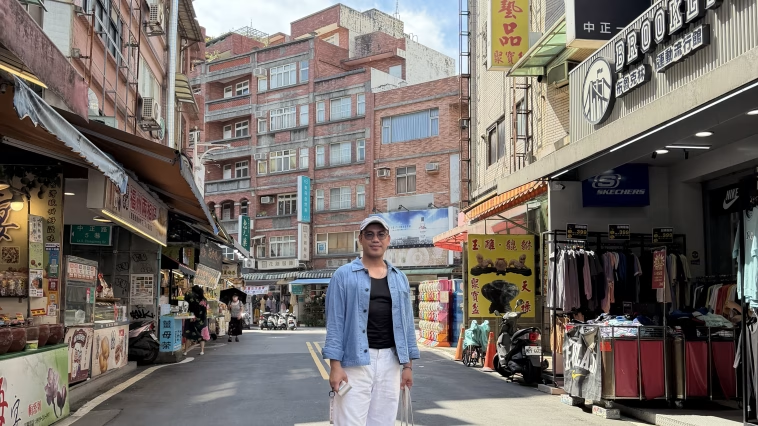
Then a leisurely stroll through Tamsui Old Street introduces travelers to local flavors, traditional architecture, and the rhythm of everyday Taiwanese life. It is more than a bustling marketplace—it is a living corridor of Taiwan’s layered history. Since the Qing dynasty, this vibrant street has thrived as a hub of commerce, with ferry docks, historic temples, and red-brick buildings that echo its past as northern Taiwan’s most vital port.

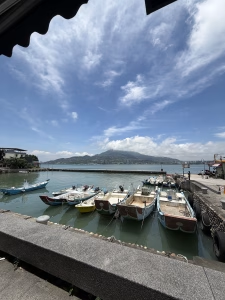

Today, visitors can wander through its nostalgic lanes, savor time-honored delicacies like iron eggs and fish ball soup, and browse souvenirs inspired by local culture. From the enduring structure of heritage architecture to the shimmering riverside views, every corner of Tamsui Old Street radiates a distinctive blend of leisure, tradition, and quiet charm that continues to define the spirit of the town.


Aside from these spots, visitors can also discover how diverse experiences can exist within a single city. Seeing the historic exhibits of the National Railway Museum, you can clearly see how Taiwan seamlessly blended heritage with innovation.


Visiting the National Railway Museum feels like stepping back into Taiwan’s railway past. Located in Xinyi District, the museum recreates the atmosphere of train maintenance workshops from the 1970s and 80s, complete with Japanese industrial-style architecture. You can wander through indoor exhibits showcasing locomotives and machinery, snap atmospheric photos against the backdrop of old train yards, and even climb into vintage carriages to imagine what travel felt like decades ago. The vibe is relaxed and nostalgic, making it easy to spend a few hours just soaking in the sights.
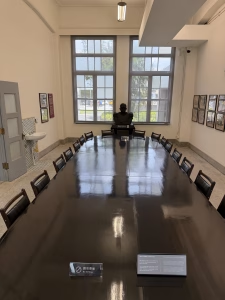

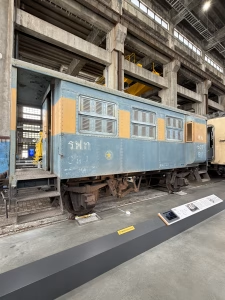


Inside, the museum offers interactive displays, maintenance tools, and railway components that bring the technical side of train operations to life. Families will appreciate the thoughtfully designed children’s playroom, while photography lovers will enjoy the industrial aesthetics. With opening hours from 9:30 AM to 5:00 PM (last ticket at 4:30 PM) and affordable admission (NT$100 for adults, NT$50 for students, free for kids under 6), it’s easy to plan a half-day visit. Pairing the museum with nearby Taipei attractions makes for a well-rounded day trip.
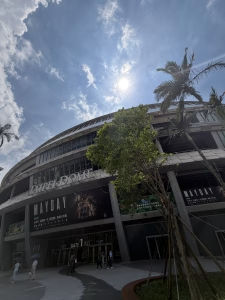

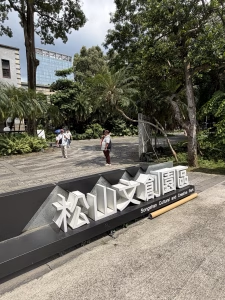




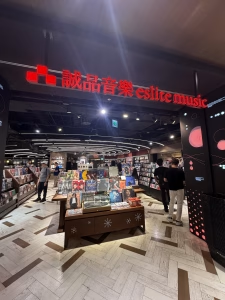
Speaking of a well-rounded day trip, the contemporary energy of Songshan Cultural and Creative Park, the modern sophistication of soon-to-open Far Eastern Garden City near the Taipei Dome, and the stylish atmosphere of Eslite Spectrum Songyan demonstrate how shopping, design, and culture coexist in one vibrant urban landscape.
The experience extends further into Taipei’s distinctive neighborhoods. Dadaocheng and Dihua Street offer a glimpse into Taiwan’s trading history through heritage buildings, artisan boutiques, tea houses, and specialty stores.
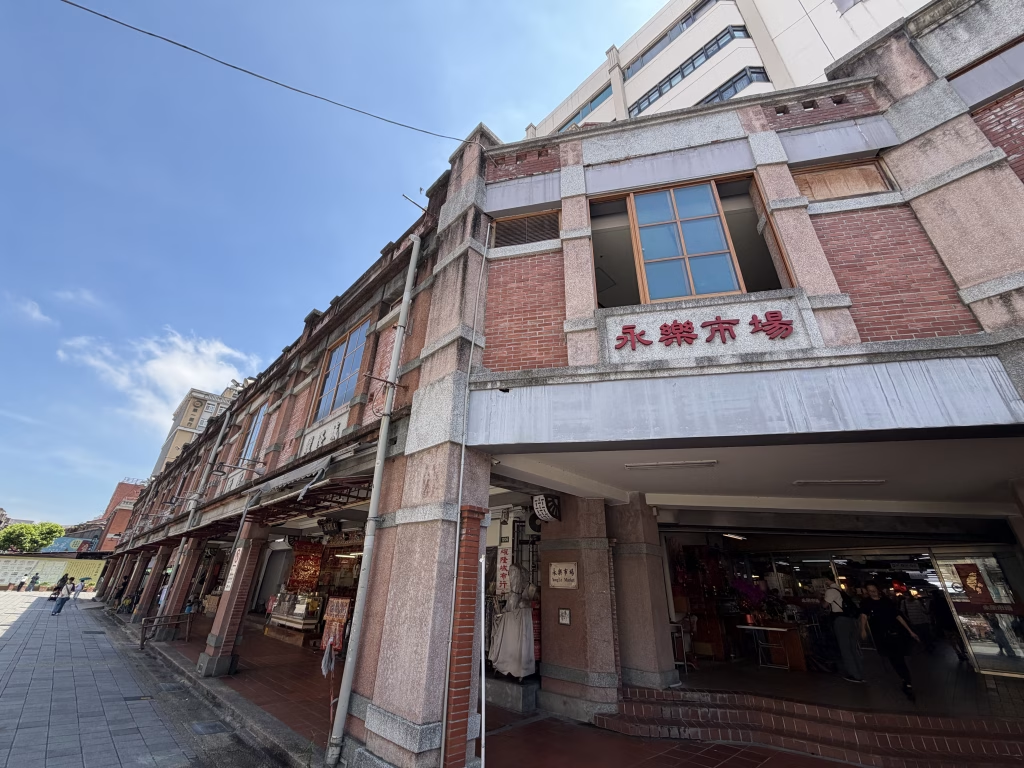


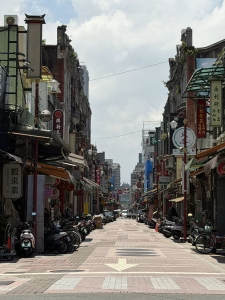
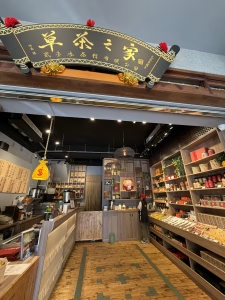

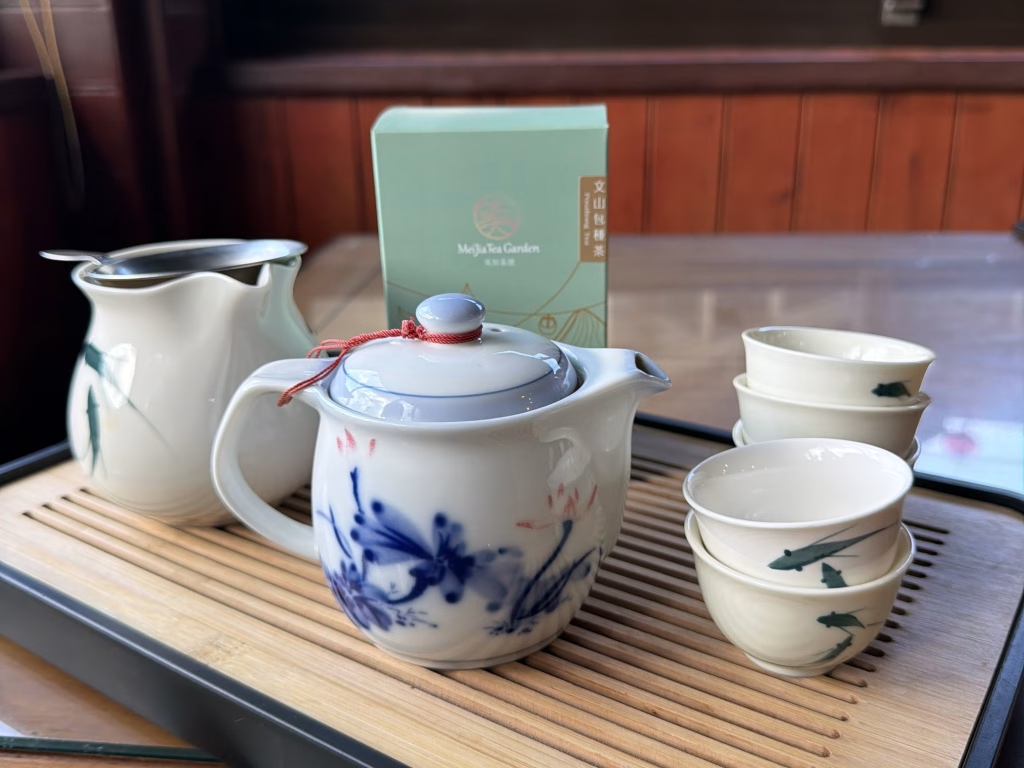
Meanwhile, the Maokong Gondola transports visitors above lush mountain scenery, where tea plantations and panoramic city views provide a tranquil escape from the urban pace.


Lastly, a visit to Chiang Kai-shek Memorial Hall offers travelers one final opportunity to connect with Taiwan’s history and identity before returning to the airport.
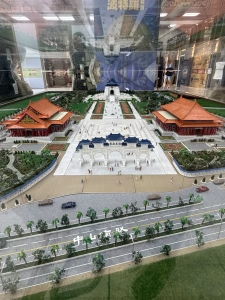

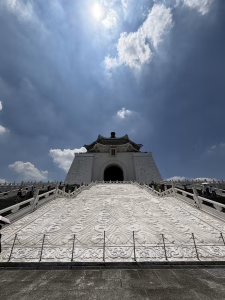

Throughout the five-day experience, one message becomes clear: Taiwan proves that a stopover is not merely waiting time. It is an invitation to explore, recharge, and discover something unexpected. Whether travelers have a few hours, half a day, or several days, Taiwan offers countless ways to create memorable moments tailored to their interests.
Every traveler’s route can be different. Every stop can reveal something new. This is the spirit of Taiwan 100 Ways—encouraging visitors to design their own journey and discover how even a transit experience can become an unforgettable chapter of travel.
Oh, by the way, do not miss to visit different stations of the 2026 Taiwan Day event in Manila to win prizes, including the grand prize, a round-trip ticket to Taiwan. This event is happening on Aug. 22-23 at Level 2 Concourse of One Ayala, Makati City.