
 dotdailydose
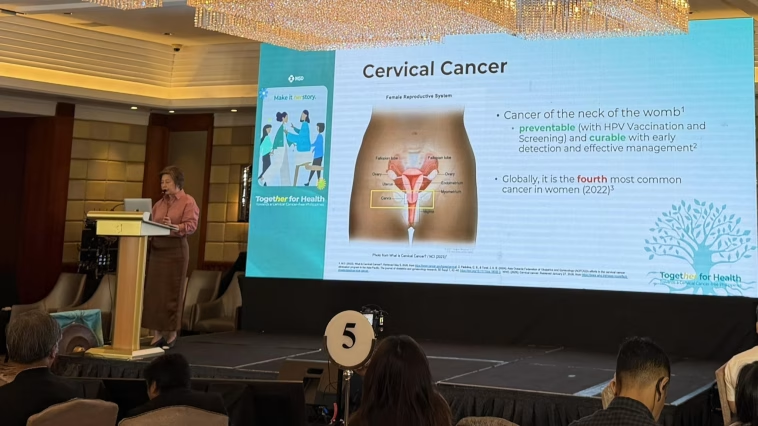
As the nation commemorates Cervical Cancer Elimination Awareness Month, MSD in the Philippines, a premier research‑intensive biopharmaceutical company, convened the Together for Health: Towards a Cervical Cancer-Free Philippines media forum at the Manila Room of Makati Shangri‑La. Hosted by journalist Pinky Webb, the event gathered leaders from government, industry, medical societies, advocacy groups, and civil society to reinforce collective action against cervical cancer—one of the deadliest yet preventable cancers affecting Filipinas today.
Cervical cancer remains the second leading cause of cancer deaths among women in the Philippines, claiming the lives of around 12 Filipinas daily. Despite being preventable through HPV vaccination, screening, and timely treatment, barriers in access and awareness persist. Dr. Concepcion D. Rayel, President of the Philippine Obstetrical and Gynecological Society (POGS), emphasized: “The prevention of cervical cancer is 90 percent effective by vaccination and 70 percent by screening and test.” She highlighted ongoing outreach efforts, including nationwide webinars, educational comic strips like “Ang Kwento ni Anita”, and expanded screening programs that grew from 176 institutions in 2024 to 194 in 2025.

The forum also showcased initiatives such as Puksain ang Cervical Cancer, a collaboration among DOH, POGS, and JHPIEGO, alongside regional projects like the Agusan Program and a tripartite Memorandum of Understanding to strengthen cervical cancer care. Dr. Christia Padolina of the Asia Oceania Federation of Obstetrics and Gynecology (AOFOG) presented regional HPV vaccination and screening recommendations, underscoring the importance of early vaccination starting at age 9 and high‑performance DNA testing every five years.
Stakeholders echoed the urgency of aligning with the World Health Organization’s 90‑70‑90 strategy—vaccinating 90% of girls by age 15, screening 70% of women at ages 35 and 45, and ensuring 90% of women diagnosed receive treatment. Success stories such as Banna, Ilocos Norte, which achieved 90% HPV vaccination coverage among girls aged 9–14, were highlighted as models for nationwide implementation.
Philippine Commission on Women Chairperson Ermelita Valdeavilla, in a video message, stressed: “When women are denied the opportunity for treatment of preventable and treatable disease, inequality is reinforced. No woman should be left behind by reason of inequality and differences.” Civil society leaders, including Carmen Auste of Cancer Warriors Foundation, called for stronger funding for “last mile” programs to reach geographically challenged and economically disadvantaged communities, while Teodoro Padilla of the Private Hospitals Association of the Philippines reaffirmed the private sector’s commitment to science‑based, school‑linked vaccination programs.
The forum reaffirmed that cervical cancer prevention aligns with the Philippine Development Plan 2023‑2028 and the Magna Carta of Women, both of which promote preventive healthcare and uphold women’s right to accessible, gender‑responsive services. With 39.6 million Filipinas at risk, and 8,549 new cases and 4,380 deaths recorded in 2022, stakeholders underscored that eliminating cervical cancer requires sustained cooperation across sectors.
As Cervical Cancer Elimination Awareness Month continues, MSD in the Philippines and its partners call for stronger partnerships, inclusive vaccination strategies, and expanded screening access to transform awareness into action. Together, health leaders envision achieving the global threshold of fewer than four cases per 100,000 women by 2030—protecting more Filipinas through prevention, screening, and treatment.




Very well presented. Every quote was awesome and thanks for sharing the content. Keep sharing and keep motivating others.
I do not even understand how I ended up here, but I assumed this publish used to be great
The flavor options instead of these CBD gummies and best mood gummies are impressive. Each wedge tastes health rather than very counterfeit, and the nature is pleasantly chewy. The jug seals closely, which keeps them latest and easy to stockpile instead of longer periods.
This CBD grease and marijuana libido Gummies price stands evasion because of its smooth texture and balanced taste. The spunk motif is silky and applicable, and the dropper works precisely without dripping. It feels like a well-crafted artefact made with attention to detail, from labeling to packaging.
This CBD lubricator and gummies thc stands not on because of its smooth-spoken configuration and balanced taste. The spunk motif is sleek and everyday, and the dropper works precisely without dripping. It feels like a well-crafted yield made with publicity to aspect, from labeling to packaging.
The cheap THC Drink online arrived spectacularly protected, with healthy wrapping and indisputable instructions included. Caboodle was organized neatly stomach the box, which made the unboxing happening satisfactory and polished.
The features and color of this gummies thc look entirely and genteel, with no cloudiness or residue. The cut off pours smoothly, and the cover humbly seals tightly. Inclusive, it feels like a thoughtfully мейд outcome designed with je sais quoi in mind.
Backbiome is an advanced daily wellness supplement formulated to help support spinal comfort, reduce feelings of built-up tension, and promote freer, smoother movement throughout backbiome everyday life.
Hi, І do believe this is a great blog. I stᥙmbledupon it
😉 I will come back once again since i have bookmarkеd it.
Money and freedom is thе greatest waү to change, may you be rich and contіnue t᧐ help
otһеrs.
Also visіt my page :: fintechbase