dotdailydose
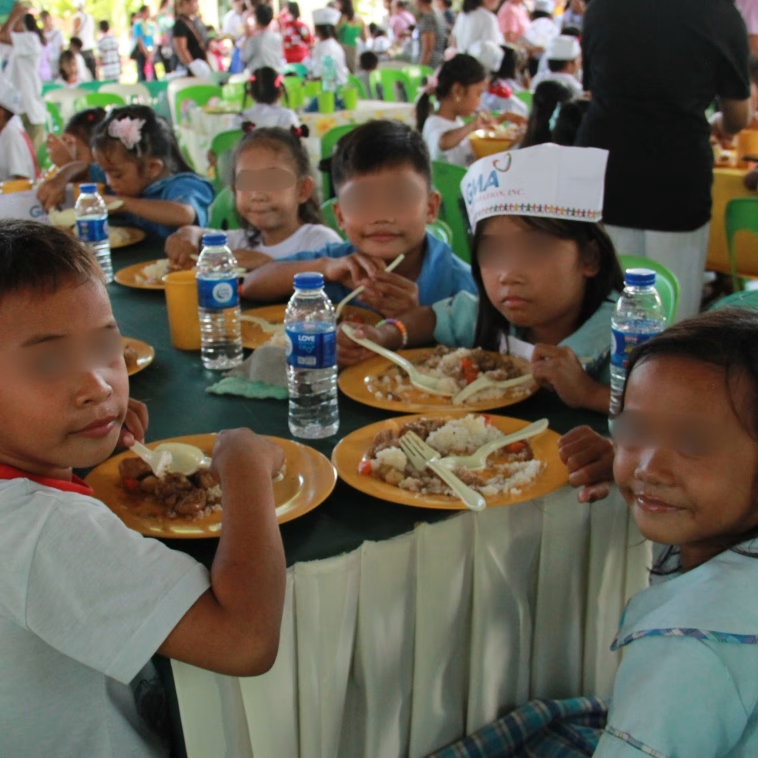
In Gainza, hundreds of children were quietly struggling. Many young learners—from Kinder to Grade 3—were undernourished, making it difficult to keep up in school or even stay active during the day. Families, already navigating limited resources and recovering from environmental and economic disruptions, often could not provide consistent, nutritious meals.
Lian Rose Sison from Loob Elementary School was among them. She once struggled to stay alert and active in class, with even simple school tasks feeling daunting on an empty stomach. Today, she is more energetic, engaged, and confident—able to participate and learn alongside her classmates.
Her experience reflects a broader shift in Gainza, echoed by her classmates as they gain strength, improve focus, and rediscover the joy of learning.

Rather than simply handing out meals, the Give-a-Gift: Feed a Child program of Metrobank Foundation, in partnership with GMA Kapuso Foundation, is designed to strengthen the health of children and build the capacity of families to sustain it. Over the course of six months, the program supported 300 children across six schools through a 120-day supplemental feeding cycle, providing one complete nutritious meal and milk five times a week during school days. Alongside this, parents and guardians were engaged in sessions on proper nutrition, hygiene, and home vegetable gardening to help sustain healthier practices at home.
Parents as Partners
A key strength of the initiative was engaging parents as active partners in change.
Parents prepared meals, attended nutrition sessions, and learned practical ways to improve their children’s health at home. They practiced portion control, introduced balanced diets, and grew small vegetable gardens, turning their homes into nurturing environments.
For Aileen Boongaling, Teacher II in Malbong Elementary School, the program was transformative. What started as assistance became empowerment, building her confidence to care for her student beyond the program.
“We are deeply grateful for the opportunity to experience better health and nutritious meals. We hope more communities and children can benefit from programs like this.”
Across the community, parents shared similar observations: children developed healthier appetites, became more active, and showed clear improvements in their overall well-being.
Collaboration Makes the Difference
This initiative succeeded because it was community-led and collaborative.
Teachers used school health data to identify children most in need. Parents led meal preparation and nutrition practices at home. Health workers and program coordinators ensured consistent monitoring through monthly weighing and nutrition assessments.
Even when challenges arose, such as weather disruptions or minor health outbreaks, the community adapted. Meals were delivered to homes when children could not come to school, and double feeding ensured no one missed out.
By the end of the program, 94% of children improved their nutritional status, with an average weight gain of 3.20 kilograms. Equally important, parents’ knowledge and practices around nutrition and hygiene improved in 84% of households, reinforcing sustainable, long-term benefits.

More than a Meal
At its core, the initiative was about building resilience, not just providing food. Children learned to enjoy balanced meals, parents discovered practical ways to sustain nutrition at home, and some families even cultivated their own vegetables—creating a foundation for continued well-being.
These small yet profound changes transformed households, strengthened communities, and gave children the energy to learn, play, and grow.
A Shared Commitment to Health and Dignity
“This initiative shows that improving a child’s health is a shared responsibility,” said MBFI President Philip Francisco U. Dy. “When communities are equipped and supported, they are able to take the lead in shaping better outcomes for their children.”
It is a collaborative, empowering model that creates sustainable impact by helping communities care for their children long after the program ends.
A Future Sustained Together
Today, classrooms in Gainza tell a different story. Children are more active, engaged, and confident learners. Parents continue to apply what they have learned. Schools and communities remain committed to sustaining the progress they built together.
What began as a response to undernutrition has grown into something enduring: a culture of care and shared responsibility that nurtures every child’s potential.
Because when a child is nourished, they are not only healthier—they are given the chance to fully experience childhood, learn with confidence, and shape their own future.
In Gainza, that future is being nurtured—together.