
 dotdailydose
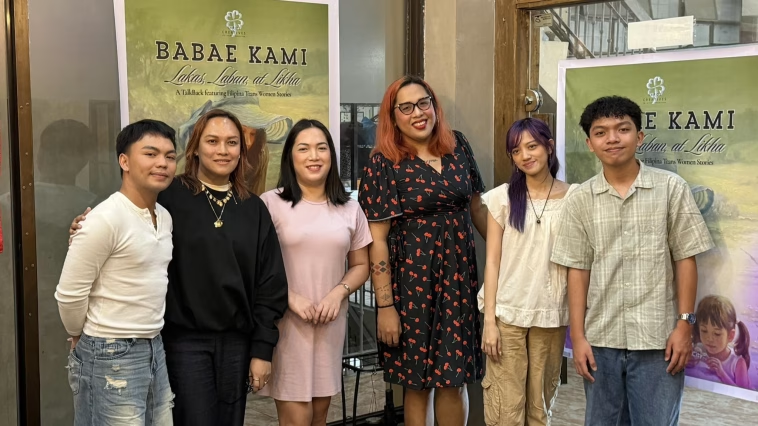
Verde Creatives successfully held “BABAE KAMI: Lakas, Laban, at Likha – A TalkBack featuring Filipina Trans Women Stories” at Dark Roast Coffee House, TKC Square, Maginhawa, Quezon City.
As part of the 2026 National Women’s Month* celebration sub-themed “Lead like the Babaylans, Filipinas!”, the forum reclaimed the spirit of the Babaylan—pre-colonial leaders whose wisdom and empathy embodied inclusive community care—while centering the lived experiences of trans women in the Philippines. The event highlighted how the national goal of building an “inclusive society” must be understood in concrete terms not just for cisgender women but also trans women, who continue to face legal invisibility, economic marginalization, as well as social stigma despite cultural narratives of tolerance.

The program began with a screening of A Revolution of the Heart, a documentary by University of the Philippines Diliman students, featuring Verde Creatives’ Managing Director and veteran LGBTQIA+ advocate Ms. Bemz Benedito. The short film explored the revolutionary act of recognizing trans bodies as sites of dignity and creative potential.

This was followed by a TalkBack forum featuring Ms. Benedito, who is also the first transgender woman to run as a congressional nominee in the Philippines; alongside Ms. Venus Ancheta-Lane and Ms. Gigi Marie Garcia, both representatives from the Society of Transsexual Women of the Philippines (STRAP), the pioneering advocacy group for legal gender recognition and livelihood programs for trans persons deprived of liberty.
- Identity Recognition: Currently, transpinays cannot legally change their name or sex on birth certificates and government IDs due to restrictive laws like the Clerical Error Law of 2001 and Supreme Court rulings.
- Anti-Discrimination Legislation: The SOGIE Equality Bill remains unpassed after over 20 years, leaving trans women without national-level protection against discrimination in workplaces and public spaces.
- Property and Civil Rights: The absence of marriage equality or civil union laws limits the ability of transpinays to secure economic and property rights for their partners and families.
- Economic Barriers: Transphobia in the workplace remains a stiff barrier, often pushing talented TransPinays into precarious or informal labor. Discrimination in hiring and promotion is common, often pigeonholing transpinays into specific industries like beauty and entertainment.
- Healthcare Access: Finding gender-affirming care that is affordable, professional, and free of judgment is still a luxury for many, not a standard. Due to the high cost and lack of competent providers, many transpinays resort to self-medicating with unregulated hormones, which poses serious health risks.
- Safety: While TransPinays see more of themselves in media, the streets don’t always feel safer. Subtle forms of violence, such as deadnaming, misgendering, and online harassment, are daily realities for many in the community. The Philippines has reported high rates of violence against trans people, ranking 8th worldwide in trans murders in 2023.
- Public Accommodations: Trans women are regularly barred from using restrooms or facilities that align with their gender identity, leading to public harassment and even arrest.
- Religious Influence: Strong religious ties in the Philippines often lead to ecclesiastical dilemmas, where trans women experience exclusion and moral condemnation within their spiritual communities.
The discussion then arrived at a pivotal moment following the February 2026 Supreme Court ruling affirming property co-ownership rights**. While intended for all adult Filipinos, it is a landmark move for the LGBTQIA+ community, as well as solo parents, and those in non-marital relationships, who are often denied decision-making rights because they are not legally recognized as “next-of-kin”.

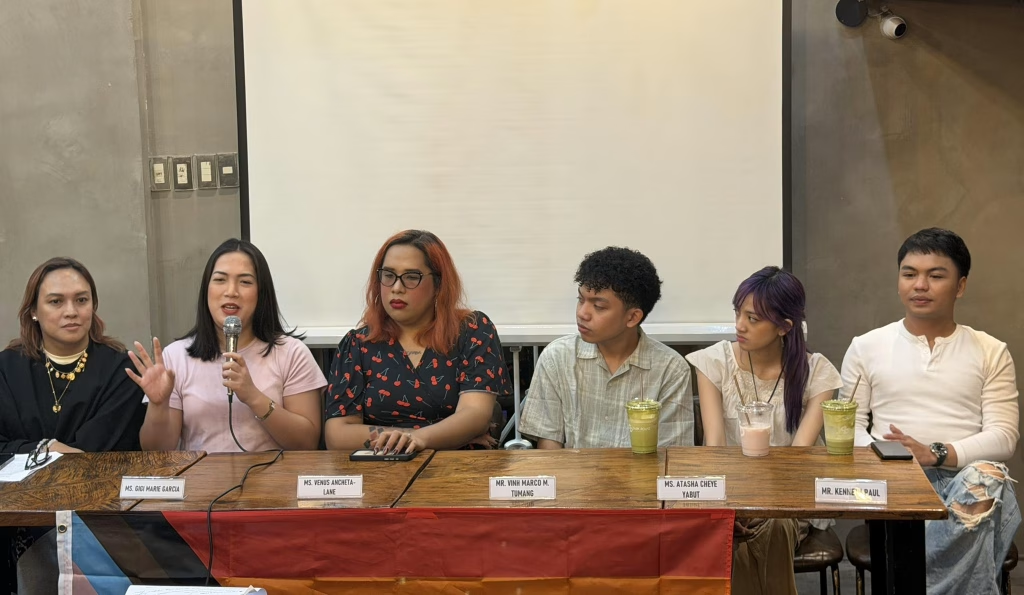
Yet, the stalled Sexual Orientation, Gender Identity, and Gender Expression, and Sex Characteristics or SOGIESC Bill, the longest-running legislation under Senate interpellation, underscored the gap between progressive rulings and everyday realities. Together, the panelists emphasized that inclusion must go beyond visibility and symbolic gestures, demanding structural reforms that secure trans women’s rights and opportunities.
For TransPinays, the promise of an inclusive society by 2026 means dismantling systemic discrimination, ensuring legal recognition, economic justice, and cultural respect. As Ms. Benedito, recipient of the Global Transgender Hero Award, stated during the forum, “Filipinos are often noted for kindness and tolerance, but our ultimate goal is full acceptance and equality. This forum challenged the stereotypical boxes imposed on trans women and highlighted our contributions through Lakas (strength), Laban (struggle), and Likha (creation).”
By reclaiming the Babaylan spirit, BABAE KAMI positioned trans women, especially TransPinays, not as marginal figures but as leaders, creators, and agents of change—embodying what a truly inclusive Philippine society must look like in 2026 and beyond.





I’m often to blogging and i really appreciate your content. The article has actually peaks my interest. I’m going to bookmark your web site and maintain checking for brand spanking new information.
I do not even understand how I ended up here, but I assumed this publish used to be great
Backbiome is an advanced daily wellness supplement formulated to help support spinal comfort, reduce feelings of built-up tension, and promote freer, smoother movement throughout backbiome everyday life.
https://bluelinepharmacy.shop/# BlueLine Pharmacy
BlueLine Pharmacy