dotdailydose
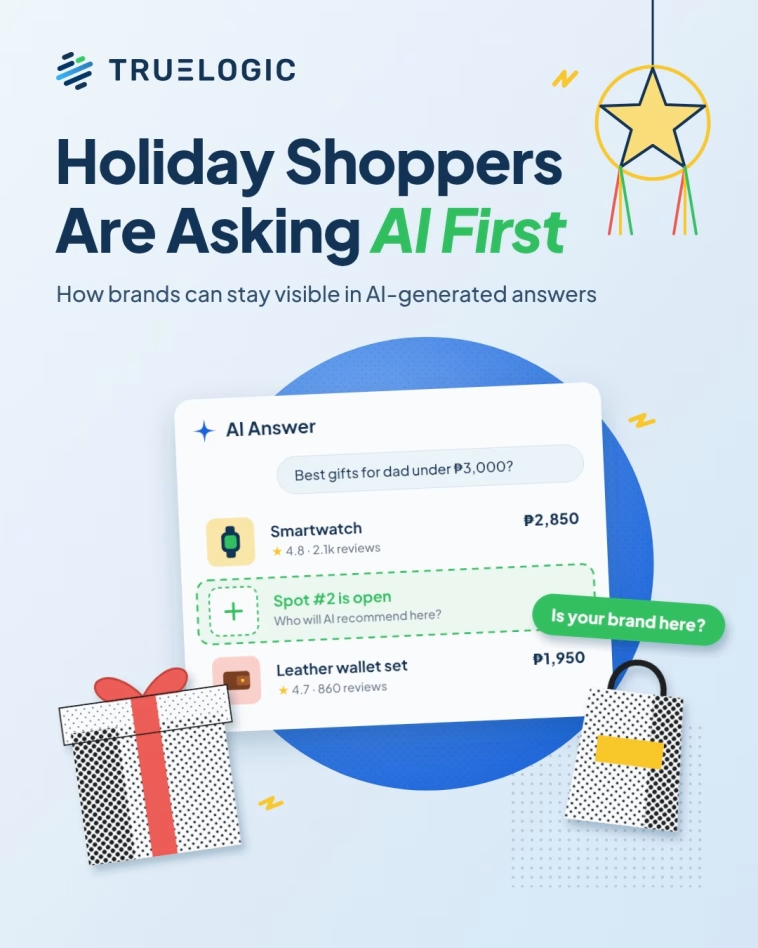
As the holiday shopping season begins, Filipino consumers are using AI tools to discover gift ideas, compare products, check reviews, and narrow their choices. Instead of moving between multiple search results, product pages, and retailer sites, shoppers can ask a conversational question and receive a shortlist in one response.
This shift is changing the point at which brands enter the buying journey. A retailer can rank well in conventional search and still be missing from the AI-generated answer a shopper sees first.

The Shifting Search Landscape
The change is already visible in Philippine search data. A 12-month Truelogic study tracking 80 brands across seven sectors found that mentions of Philippine brands in Google AI Overviews increased more than 23-fold from January to December 2025. Retail, e-commerce, and real estate recorded the strongest growth in AI visibility.
AI adoption is also significant among Filipino internet users. According to the Digital 2026 Global Overview Report by We Are Social and Meltwater, using GWI data, 42.4 percent of Filipino internet users aged 16 and above surveyed said they had used ChatGPT in the previous month, placing the Philippines sixth among the markets measured, with dominant use in the under-25 year old market.
What This Means for Holiday Shopping
The studies do not measure holiday purchases directly, but their findings point to a clear implication for retailers and e-commerce businesses: product discovery is increasingly happening inside AI-generated answers. During the holiday rush, shoppers can use these tools to compare price ranges, features, reviews, availability, and gift suitability before visiting a brand or retailer website. Google Analytics already reports conversions originating from LLM referrals.
That makes accurate, structured, and credible information more important. If AI cannot easily find or verify a brand’s product details, store information, expert content, or independent coverage, the brand may be absent from a shopper’s initial shortlist.
How Brands Can Improve Their AI Visibility
Truelogic’s PROOF Framework gives businesses a practical way to review their readiness across five areas:
- Platforms: Check what trusted sources, including your website, news sites, reviews, directories, and marketplace listings, say about the brand.
- Retrieval: Make key product and business information easy to find, crawl, and read on the website.
- Organization: Structure pages around the questions customers ask, using clear headings, direct answers, and helpful product details.
- Originality: Publish useful and original first-party data, expert perspectives, and customer guidance that other sources can reference.
- Footprint: Monitor how accurately and consistently AI tools describe and recommend the brand and its products.
Applying this framework can help brands identify gaps in their AI search readiness and improve their chances of appearing in AI-generated answers. It complements, rather than replaces, traditional search, advertising, and a strong customer experience. Brands should track AI mentions and citations alongside rankings, website traffic, and sales performance.
“As we enter the busiest retail season of the year, brands need to make their product information easy for both customers and LLMs to understand and verify,” said Bernard San Juan III, Managing Partner at Truelogic. “AI visibility is not only about capturing holiday demand. It is about building a digital presence that remains credible and discoverable as consumer search behavior changes.”
For retailers and e-commerce businesses, the immediate priority is to check whether product pages answer real shopping questions, whether key facts are consistent across channels, and whether credible external sources support the brand’s claims. The goal is not simply to rank for a keyword, but to earn a place in the answers customers now receive.