dotdailydose
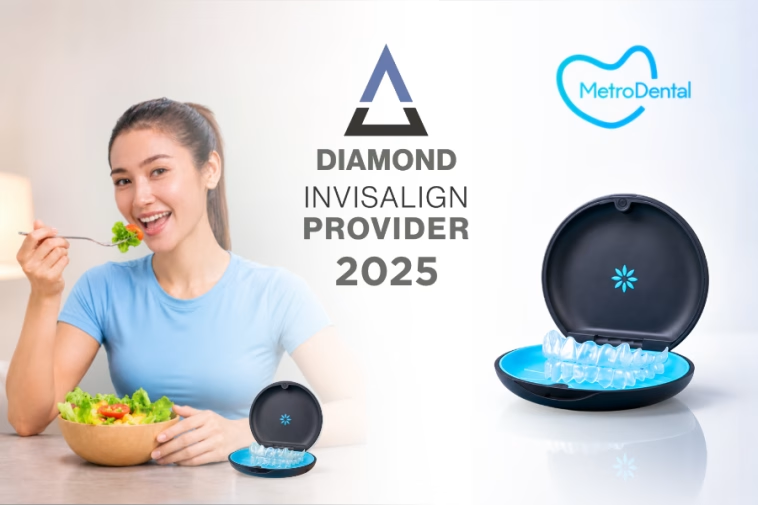
When you think about dental procedures, teeth alignment is commonly top of mind. However, what many people don’t realize is that dental alignment offers more benefits than just a put-together smile.
According to the Department of Health’s 2021 national dental survey, more than 9 in 10 Filipinos have tooth decay, and nearly 8 in 10 have gum disease[1]. Risk factors include sugar, tobacco, and poor hygiene. But did you know that how your teeth fit together also plays a role?

Crowded or misaligned teeth can create spots that are harder to clean, where plaque may build up. In some cases, a deep bite can injure the gums behind the front teeth and contribute to gum recession over time[2]. All these can lead to various oral health concerns and, in more serious cases, affect your day-to-day comfort and quality of life.
Achieving straighter teeth for your well-being may be worth adding to your self-care routine. After all, oral health deserves the same thoughtful, holistic care as any other aspect of your well-being. For those looking to improve their dental alignment, consider Invisalign, which offers a discreet and flexible treatment option, with proper assessment and guidance from a dental professional.
Getting your teeth aligned
Invisalign is a series of clear, custom-designed removable aligners that incrementally shift your teeth into position. Designed to fit seamlessly into daily life, these are worn for 20 to 22 hours a day and simply switched out every week or two as you progress.
This removable design keeps dining and oral hygiene effortless. You can enjoy your favorite meals and brush normally before slipping them back in. In fact, studies have found that patients using clear aligners tend to have less plaque and healthier gums during treatment than those with traditional braces[3]. If this is something that aligns more with what you need—a more discreet alternative or something that makes brushing more seamless—Invisalign might be the clear choice for you.
While clear aligners may take some getting used to, Invisalign is designed to fit into everyday life, from school and work to family meals. The goal is to ease chronic discomfort, make chewing and mastication fuss-free, and restore that confidence and health to its fullest.
However, Invisalign requires commitment, consistency, and a dental provider who understands your needs and is just as invested in your journey toward a healthier smile.

Taking the first step
For effective Invisalign treatment, choose a qualified provider with specialized training to create a custom plan, monitor progress, and provide post-treatment care.
MetroDental, a multi-branch dental healthcare provider in Metro Manila, offers comprehensive Invisalign treatment supported by advanced 3D digital scanning, treatment outcome simulations, and customized digital planning. Recognized by Align Technology, the developer and manufacturer of the Invisalign System, the clinic’s two-year Diamond Provider designation reflects its extensive experience in providing the treatment.
“At MetroDental, we believe that technology is only one part of successful treatment. What matters most is proper clinical assessment, careful treatment planning, and understanding each patient’s individual needs. Our goal is not only to straighten and make teeth look good, but to achieve a balance between oral health, function, and aesthetics,” shared Dr. Divinae Del Rio, President at MetroDental.
If you are looking to start with Invisalign, MetroDental currently hosts 3-day Invisalign Weekends with complimentary consultations and a 3D scan to start the treatment, along with up to PHP 30,000 in discounts. The next Invisalign Weekend will be at MetroDental’s Eastwood branch on November 20 to 22, 2026, and at Greenbelt 5 from December 4 to 6, 2026.
For more information about Invisalign, visit MetroDental’s Facebook Page @metrodental or their website at metrodental.com.ph.
[1] PIA, 2024 https://pia.gov.ph/regions/celebrating-oral-health-month-with-a-smile-ready-philippines/
[2] Sulistiawati et al., Division of Dentistry, The University of Manchester, 2020 https://research.manchester.ac.uk/en/publications/the-effect-of-deep-bite-on-periodontal-status-of-anterior-teeth/
[3] Jiang et al., Journal of the American Dental Association, https://pubmed.ncbi.nlm.nih.gov/29921415/